



















If you’re ordering glasses for your child, you may have their prescription in hand and still spot one more box asking for “PD.” So, what is pupillary distance, and why does it matter? A glasses prescription tells the lab what lens power your child needs, while pupillary distance helps make sure those lenses are positioned correctly in front of their eyes. Understanding this simple measurement can make shopping for kids eyeglasses online feel much more straightforward.
What Is Pupillary Distance?

PD stands for pupillary distance. It is the distance between the centers of the pupils, measured in millimeters (mm). Eyewear professionals use it to help place the optical center of each lens in the right position for the wearer.
Because every face is different, pupillary distance is personal to your child. Two children with the same prescription may still have different PD measurements.
What Is the Difference Between Single PD and Dual PD?
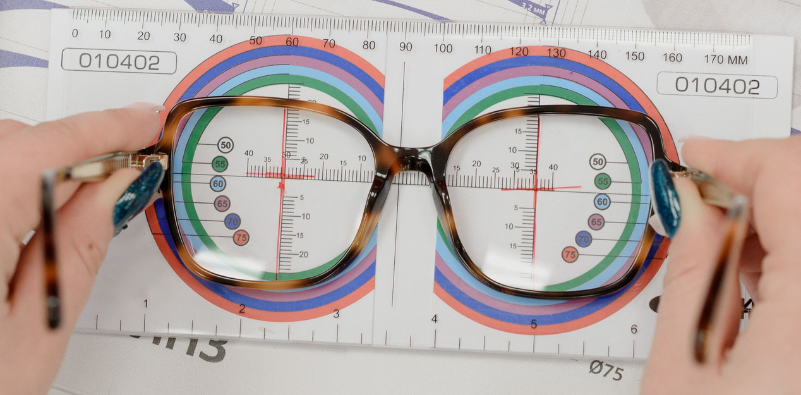
A single PD, sometimes called binocular PD, is one number measuring the distance from the center of one pupil to the center of the other.
A dual PD, also called monocular PD, uses two numbers. It measures from the center of each pupil to the bridge of the nose. Some prescriptions or online retailers ask for a single PD, while others request a dual measurement. Both are normal; the right format depends on the glasses being ordered.
Children grow, and their facial measurements can change too. That means an older PD may need to be checked before ordering a new pair.
Why Is Pupillary Distance Important for Kids’ Glasses?
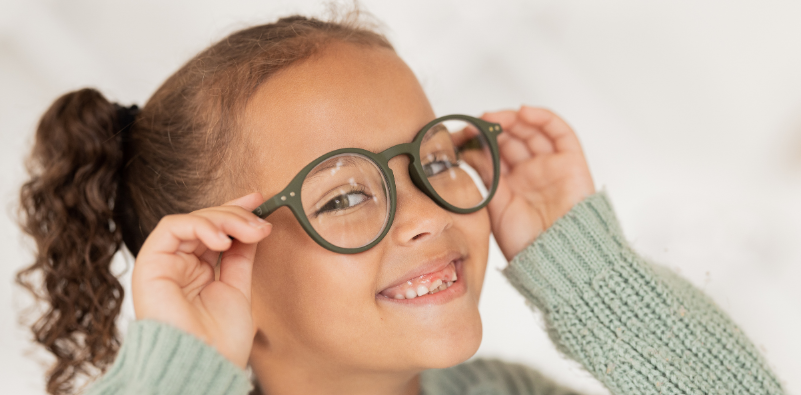
An accurate PD helps line up the optical center of each prescription lens with your child’s eyes. That alignment supports clear, comfortable vision and can make adapting to new glasses easier.
A correct measurement can help support:
- Clear vision through the intended part of the lens
- Comfortable everyday viewing
- Easier adaptation to new glasses
- Reduced visual strain
PD is only one part of a successful pair of glasses. If your child says their new glasses do not feel right or their vision is not what they expected, the prescription, frame fit, lens type, lens design, and pupillary distance can all play a role.
How to Measure Pupillary Distance for a Child
![Optician using a pupillometer to measure a child’s eyes for glasses fitting.]](https://www.yayoptics.com/wp-content/uploads/2026/08/Untitled-design-28-1.png)
The most accurate way to measure a child’s PD is to have it taken by an optician or an eye doctor. Eye care professionals have the training and tools to take the measurement carefully, which can be especially helpful for stronger prescriptions or specialized lens designs.
If you are ordering kids prescription eyeglasses online, you may also be offered a digital PD measuring tool. These tools can be convenient when used exactly as directed.
If you use an approved ruler-based method at home:
- Keep the ruler level.
- Ask your child to look straight ahead.
- Measure more than once.
- Compare the readings for consistency.
- Ask another adult to help where possible.
The key is not to estimate. If the results vary or you are unsure which number to enter, check with an eye care professional or the retailer before ordering.
Is Pupillary Distance Included on an Eye Prescription?
Not always—and that can surprise parents when they first order glasses online.
A glasses prescription contains the clinical information needed to create the correct lens power. Pupillary distance, however, is generally treated as a fitting measurement rather than part of the clinical prescription itself. Some eye care practices record PD separately, so it may not appear on the printed prescription.
If you do not see it, ask your optician or eye doctor whether they have your child’s PD on file. If it is unavailable, the measurement can be taken before you order.
Having both the prescription and PD ready can make shopping for kids designer eyeglasses or everyday frames online much simpler.
Frequently Asked Questions

Does My Child Need a New PD Every Time They Get Glasses?
Not necessarily every time, but it is worth checking periodically. Children’s faces grow and change, so a PD measurement from a few years ago may no longer be the best one for a new pair.
Can I Measure My Child’s PD at Home?
Yes, if you follow clear instructions or use a retailer’s approved measuring tool. For the most accurate result, professional measurement by an optician or optometrist remains the best option.
If you measure at home, repeat the process and compare your results rather than relying on a quick estimate.
What Happens If My Child’s PD Is Slightly Wrong?
Even a small inaccuracy can affect where the optical centers of the lenses sit in relation to your child’s eyes. That may influence visual comfort, particularly with stronger prescriptions or certain lens types.
However, PD is not the only possible factor if glasses feel uncomfortable. Prescription accuracy, frame fit, and lens design should also be considered. An eye care professional can help check the full setup.
Ready to Find the Right Kids’ Glasses?
Once you understand your child’s prescription and pupillary distance meaning, ordering glasses online can feel much less mysterious. The goal is simple: the right prescription, the right measurements, and a frame your child is happy to wear.
Browse Yay Optics’ range of kids’ eyeglasses for comfortable, durable, and stylish options designed with young wearers in mind. If you are unsure about your child’s PD before ordering, Yay Optics is here to help you get the details sorted before choosing their next pair.