











 Trustpilot
Picture this: it’s a bright Saturday morning, and you’re heading to the park with the kids. Your child is wearing their prescription glasses, squinting in the sunshine — and their sunglasses are sitting on the kitchen counter at home. Sound familiar? If you’ve ever wondered whether there’s a simpler solution, photochromic lenses might be exactly what you’ve been looking for. These clever lenses automatically adjust to changing light conditions, making them a popular choice for kids who are always on the move. But are they actually the right fit for your child? Let’s break it down.
How Do Photochromic Lenses Actually Work?
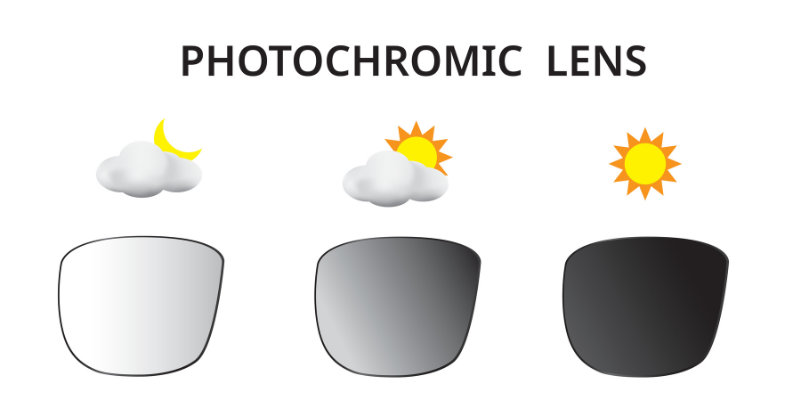
The science behind photochromic lenses is pretty cool — but you don’t need a chemistry degree to understand it. In simple terms they react to UV light and darken automatically when your child steps outside, then gradually clear again once they’re back indoors.
Parents might come across a few different names for these lenses:
- Transitions lenses — a widely recognized brand name that’s become almost synonymous with the technology
- Light-adaptive lenses — the more generic term you might see used by opticians or eyewear retailers
Both refer to the same basic concept: one pair of glasses that adapts to the light around them. Simple as that.’
What Are the Real-World Benefits for Kids?
When it comes to kids’ glasses frames, practicality matters just as much as style. Here’s where photochromic lenses genuinely shine for school-age children:
Convenience — one pair, two jobs. No more juggling prescription glasses and a separate pair of sunglasses. Whether your child is heading from the classroom to the playground or from the car to a soccer match, their lenses adjust automatically. No swapping, no forgetting, no fuss.
Built-in UV protection. Photochromic lenses offer automatic UV protection glasses-style coverage every time your child steps outside — no extra step required. Kids’ eyes are actually more sensitive to UV light than adult eyes, so this kind of effortless protection is a genuine win.
Comfortable vision as light changes. Think about a typical school day: inside the classroom, out at recess, back inside for lunch, then after-school sports. Light levels shift constantly, and photochromic lenses help eyes adjust more comfortably throughout all of it. Less squinting, less strain, more focus on the fun stuff.
Are Photochromic Lenses a Good Fit for Your Child?
This is really the heart of the question — and the honest answer is: it depends on your child’s lifestyle. Here’s a helpful way to think about it.
Photochromic lenses tend to be a great fit for kids who:
- Love being outdoors — whether that’s sports, recess, or just spending time in the backyard
- Move frequently between indoor and outdoor environments throughout the day (hello, school schedules)
- Find managing two separate pairs of glasses tricky or tend to misplace things
- Are at an age where they’re becoming more independent and you want to simplify their routine
What about kids who spend most of their time indoors? Photochromic lenses will still work perfectly well as everyday prescription lenses — they just won’t darken as often. In that case, a standard pair of prescription lenses might be the more straightforward choice, and a dedicated pair of sunglasses could be a great addition for sunny days out.
The key is thinking about your child’s actual day-to-day life, not just the ideal scenario.
Photochromic Lenses vs. Sunglasses: Do You Need Both?

This comes up a lot, and the short answer is: they’re not competitors — they’re teammates.
Glasses that turn dark in sunlight (photochromic lenses) are brilliant for everyday use. They handle the school run, the walk to the park, the afternoon sports practice. They’re convenient, automatic, and always there when you need them.
Dedicated sunglasses, on the other hand, are a great complement for high-intensity sun situations — a beach holiday, a ski trip, a long day at an outdoor event. Wraparound sunglasses also offer more coverage from the sides, which can be useful in very bright conditions.
So if your child already has photochromic lenses and you’re heading somewhere particularly sunny, packing a pair of sunglasses alongside them is a perfectly sensible move. Think of it as having the right tool for the right job.
Choosing the Right Frames and Lenses for Your Child

Once you’ve decided photochromic lenses are worth exploring, the next step is finding the right frames to pair them with. For active kids, that means prioritizing:
- Durable, well-fitting frames that can handle the bumps and tumbles of real childhood
- Quality prescription lenses with reliable UV protection built in
- Flexible lens upgrade options — including photochromic, blue light filtering, or anti-reflective coatings depending on your child’s needs
At Yay Optics, we’ve built our kids’ eyewear range with exactly this in mind. Our frames are designed for active, real-world childhoods — sturdy enough to survive the playground, stylish enough that your child will actually want to wear them. And when it comes to prescription lenses, we offer a range of lens upgrade options including photochromic lenses, so you can customize each pair to suit your child’s lifestyle.
Whether your child needs their first pair of glasses or you’re upgrading an existing prescription, it’s easy to find frames they’ll love and lenses that work hard for them.
Ready to Explore Photochromic Lenses for Your Child?
If you think light-adaptive lenses could make life a little easier for your family, we’d love to help you find the perfect pair. Browse our full range of kids’ frames and lens options at Yay Optics — and if you have questions about what are Transitions lenses or which photochromic lenses properties are right for your child’s prescription, our team is always happy to help.
One pair. All-day comfort. Zero squinting. Sounds pretty good, right?