



















The Moment Everything Changed
I’ll never forget the little boy who walked out of the clinic wearing his first pair of glasses. He stopped on the sidewalk, looked up at the trees, and said with complete shock: “I didn’t realize you were supposed to be able to see the individual leaves.”
That moment has stayed with me. And honestly? It’s not as rare as you’d think.
Here’s the thing about kids’ vision: they don’t know what they’re missing. Their blurry world is just… the world. They’ve never seen it any other way, so they have no reason to complain. What looks like a focus problem, a reading struggle, or a kid who “just doesn’t like school” is sometimes a child who simply can’t see the board.
That’s why I put together these seven truths. Not to scare you, but to give you the knowledge to actually get ahead of this.
1. Your Child Doesn’t Know What “Clear” Looks Like
This one surprises parents every time.
If your child has never seen the world in sharp focus, they genuinely believe everyone sees the same green blob they do. They’re not hiding anything from you. They just don’t have a reference point for “clear.”
The takeaway: Kids don’t report vision loss. They just see what they can.
This is exactly why waiting for a complaint is the wrong strategy. A comprehensive eye exam starting at age three gives you the full picture before your child ever has to struggle.
2. School Screenings Miss More Than You Think
Raise your hand if you assumed a passed school vision screening meant your child’s eyes were fine. (Most parents do.)
Here’s the reality: school screenings are basically a pass/fail test for obvious problems. A comprehensive eye exam is a completely different thing. It’s a full medical evaluation that looks at why and how your child sees, and it’s the only way to properly screen for a range of eye conditions that a basic screening will never catch.
The takeaway: Screenings miss about 1 in 3 children with treatable eye conditions.
The biggest difference? Dilation. When an eye doctor uses drops to dilate your child’s pupils, they can see inside the eye, check the retina, and measure the actual prescription without the child’s focusing muscles getting in the way. Without that step, conditions like astigmatism or unequal vision between the two eyes can go completely undetected, and those are the kinds of things that can cause permanent vision loss if caught too late.
3. The “Face or Case” Rule (And the Cleaning Tip That’ll Save Your Sanity)
Getting your kid to wear their glasses is one battle. Keeping those glasses in one piece is another.
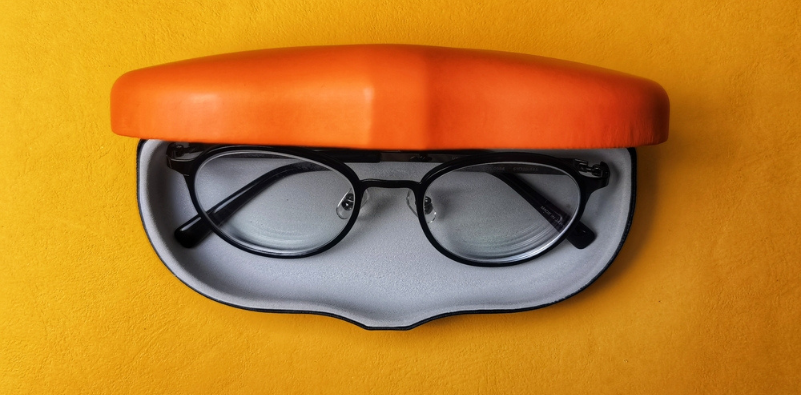
There’s a simple rule that works really well: glasses stay on your face or they go in your case. No exceptions. No leaving them on the couch, the floor, or the bottom of a backpack.
The takeaway: This one rule prevents most of the damage and most of the “I can’t find them” moments.
And while we’re here, a quick word on cleaning: please don’t let your kid wipe their lenses on their shirt. Or a paper towel. Or a tissue. All of those materials are basically sandpaper for lens coatings. Instead, use a tiny drop of lotion-free dish soap, rinse under lukewarm water, and dry with a microfiber cloth. That’s it. Your lenses will last so much longer.
4. Impact-Resistant Lenses Aren’t an Upgrade. They’re the Standard.
When it comes to kids’ glasses, we’re not just thinking about how well they can see. We’re thinking about what happens when a ball hits them in the face at recess.
Standard plastic or glass lenses can shatter on impact. That’s not a risk worth taking.
The takeaway: Polycarbonate and Trivex lenses are the baseline for children, not a premium add-on.
Polycarbonate is up to 10 times more impact-resistant than regular plastic and naturally blocks 100% of UV rays. Trivex lenses are a great option too, especially if you’re in a colder climate, since they hold up better in extreme cold and are even lighter than polycarbonate. Both are a significant step up from standard materials when it comes to protecting active kids.
One more thing to look for: spring hinges. These let the arms of the frame flex outward without snapping, which is a lifesaver for kids who pull their glasses off with one hand (so, all of them).
5. Blue Light Isn’t the Villain. Blinking Is.
There’s a lot of marketing noise around blue light glasses for kids, so let’s clear this up.
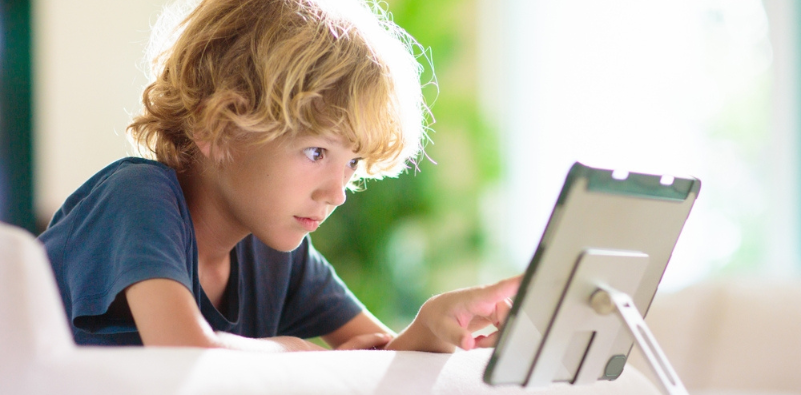
According to the American Academy of Ophthalmology, blue light from screens does not cause retinal damage. The eye strain your child feels after screen time is actually caused by not blinking enough. Staring at a screen drops your blink rate significantly, which leaves eyes dry, tired, and uncomfortable.
The takeaway: Digital eye strain is a behavior problem, not a light problem.
Where blue light does matter is sleep. It suppresses melatonin, which can mess with your child’s ability to wind down at night. So screens before bed are still worth limiting, just not for the reason most people think. And if someone’s trying to sell you blue light glasses as a solution to eye strain, know that the evidence just isn’t there to back that up.
The best fix? The 20-20-20 rule. Every 20 minutes, have your child look at something 20 feet away for 20 seconds. It resets their focusing muscles and gets them blinking again. Simple, free, and it actually works.
6. Outdoor Time Is One of the Best Things You Can Do for Their Eyes
We’re in the middle of a global nearsightedness epidemic, and it’s accelerating. Nearsightedness (also called myopia) means your child can see things up close but struggles with distance, and it’s becoming more common in kids every year. Genetics play a role, but so does environment, and this is where parents have real power.
The takeaway: Just 40 extra minutes of outdoor play per day can meaningfully reduce the risk of severe nearsightedness.
Natural light acts as a biological signal that helps regulate how the eye grows. Without enough of it, the eye can elongate too much, which is what causes nearsightedness to worsen over time. Myopia progression is fastest around age seven, so this is the window where outdoor time really counts.
This isn’t just a “get off the iPad” conversation. It’s a genuine strategy for protecting your child’s long-term kids’ vision health.
7. Vision Is a Skill Your Child Has to Learn
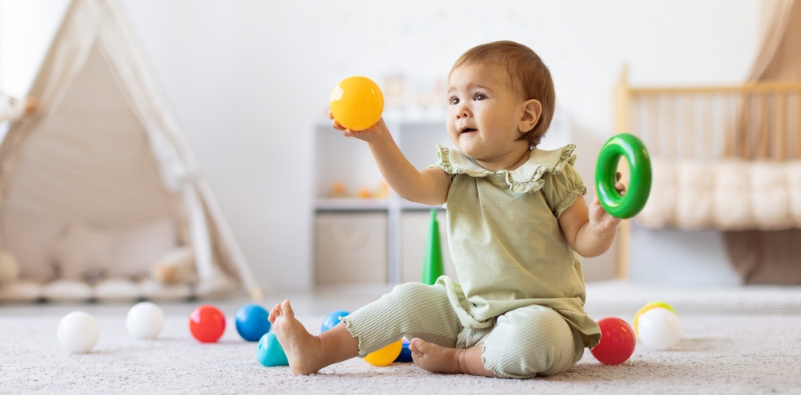
Most people assume vision is something you’re just born with. It’s actually something the brain builds.
The first six years of life are a critical window where the brain is actively developing the neural pathways for sight. During this time, even something as simple as crawling matters. Those cross-lateral movements help the brain coordinate the eyes and hands together, building depth perception and the ability to use both eyes as a team.
The takeaway: If eye conditions are caught during this window, they can often be corrected. Once it closes, treatment becomes much harder.
This is especially true for amblyopia (lazy eye). The brain is highly adaptable in these early years, which means early intervention can make a real difference. Wait too long, and the neural pathways are set.
So, What Now?
Protecting your child’s vision doesn’t have to be complicated. It comes down to a few things: getting comprehensive eye exams (not just screenings), choosing the right lens materials like polycarbonate or Trivex lenses, teaching good habits early, and getting them outside more.
The hardest part is that kids won’t tell you when something’s wrong. They don’t know anything is wrong. That’s why you’re the one who has to stay ahead of it.
If you’re not sure where to start, explore our kids’ frames at Yay Optics and find a pair they’ll actually want to wear. Because the best glasses are the ones they keep on their face.